Understanding Scoliosis
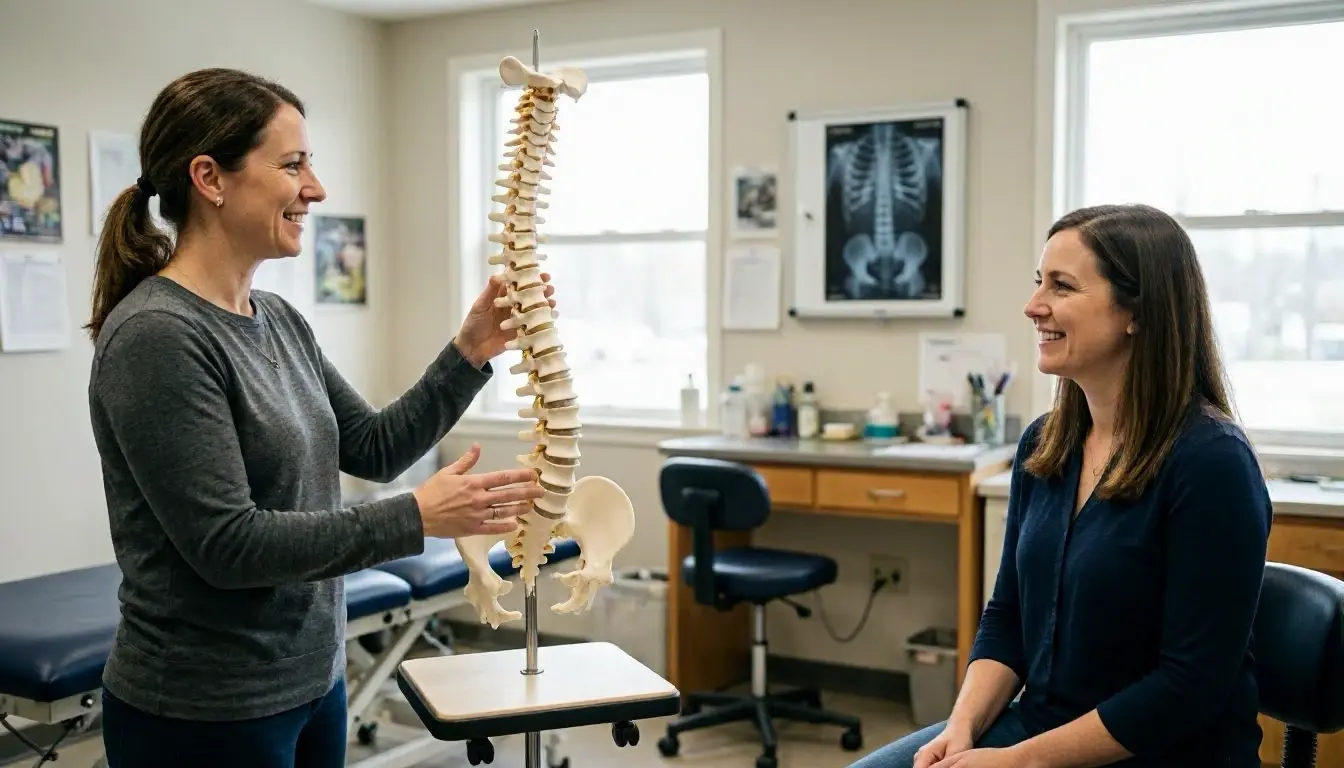
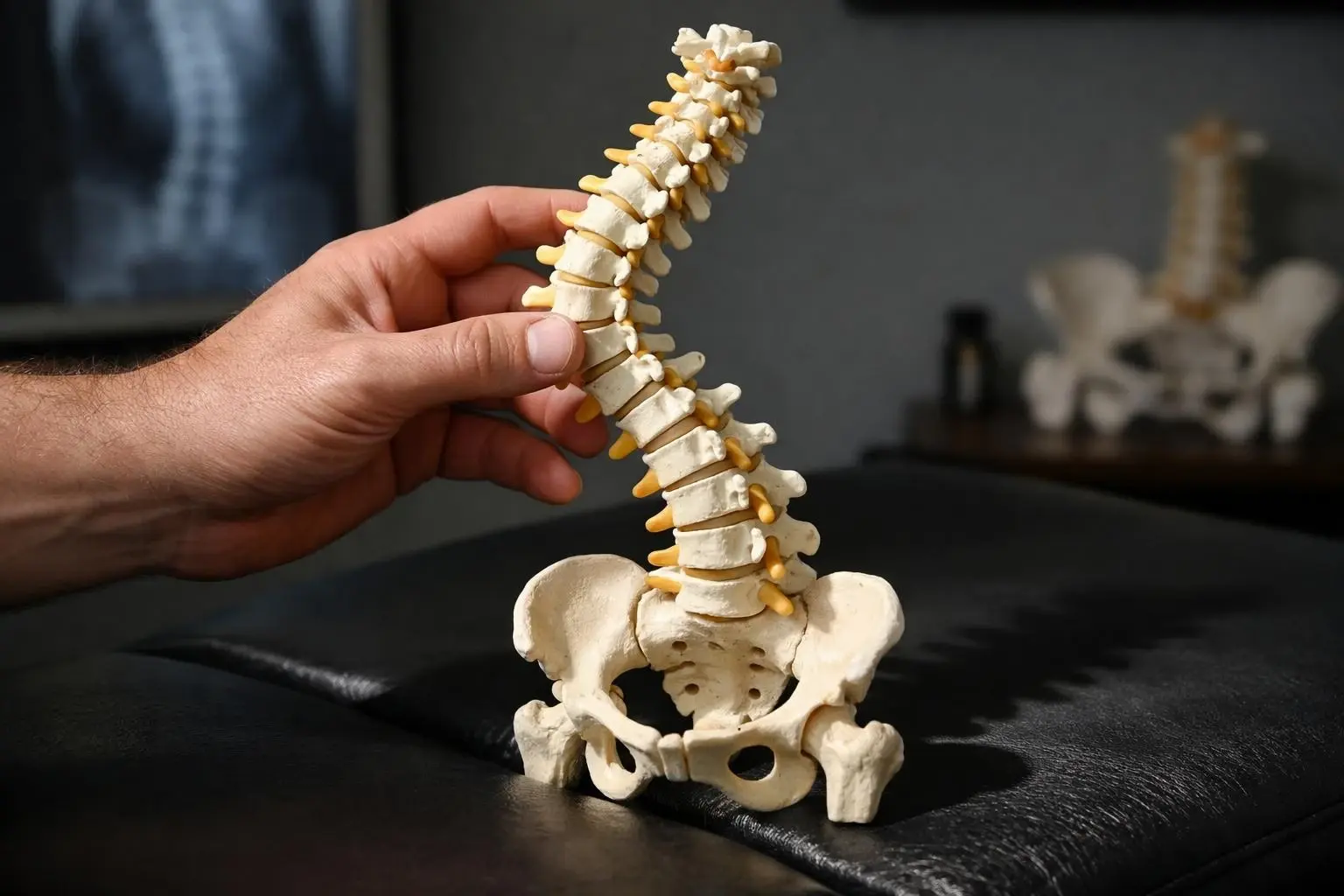
Scoliosis makes the spine curve sideways. It looks like a "C" or "S" shape. The spine should be straight.
Related glossary terms: Back Pain, Spinal Decompression, Chiropractic Care.
This curve can happen anywhere on the spine. It's most common in the chest or lower back. These are called thoracic and lumbar areas.
The curve may be small or big. Small curves don't hurt much. Big curves can change how the body looks.
It can happen at any age. But it's found most in kids and teens. This is usually between ages 10 and 15.
Most scoliosis has no known cause. Doctors call this idiopathic (no clear reason). Some types come from other health problems.
These problems include cerebral palsy (a muscle control issue). They also include muscular dystrophy (a muscle disease). Birth defects can cause it too.
Adults can get scoliosis from spine wear and tear. This happens as discs and joints break down. It's not the same as kyphosis or lordosis.
Kyphosis makes the back round forward. Lordosis makes the lower back curve inward. Scoliosis curves sideways.
This sideways curve can twist the spine and ribs. One shoulder or hip may look higher. This is how you might notice it.
How Scoliosis Is Measured?
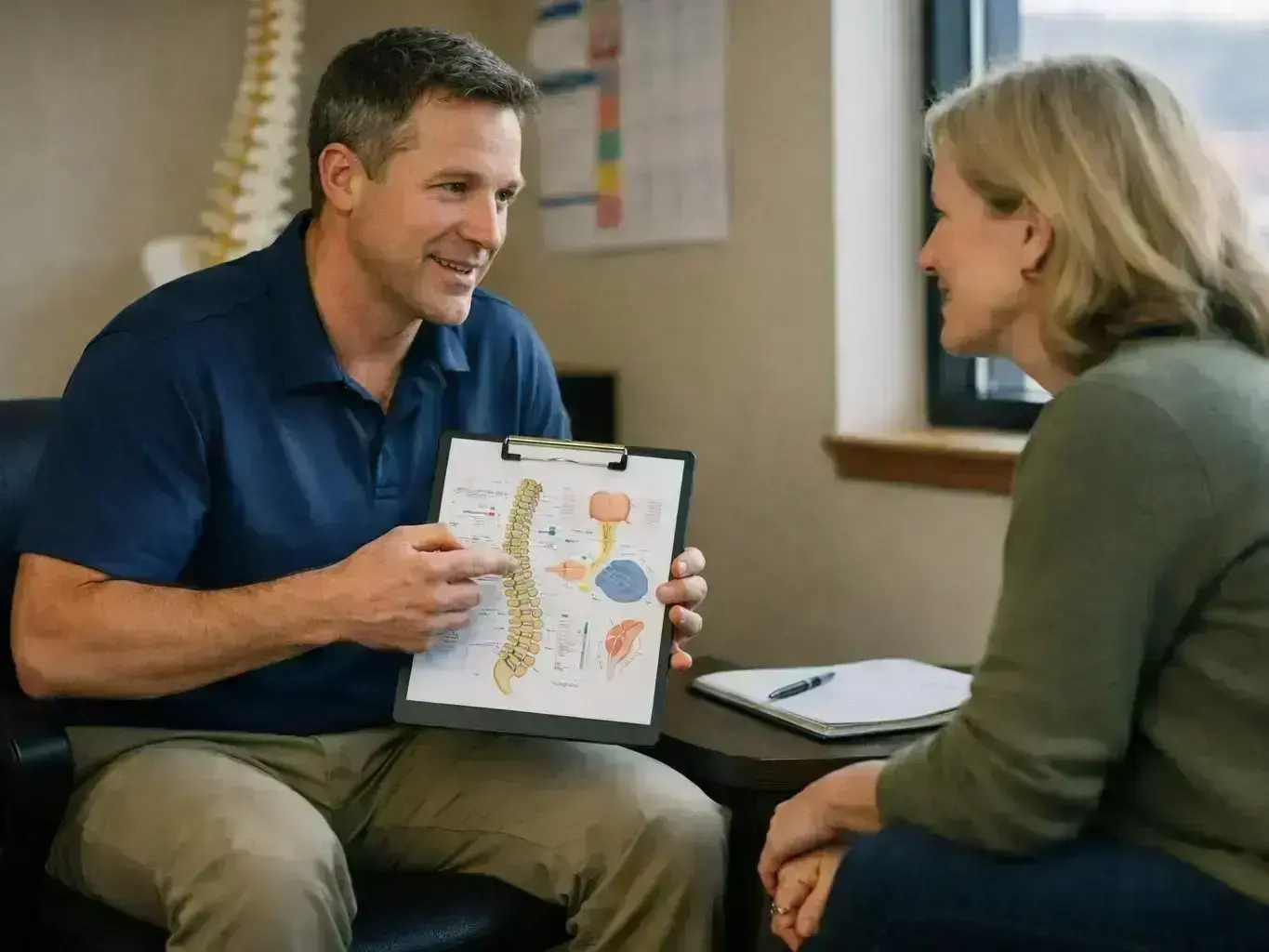
Doctors find scoliosis with a check-up. They also use X-rays to be sure. The check-up includes a simple test.
The test is called the Adam’s forward bend test. The patient bends forward at the waist. The doctor looks for uneven ribs or spine.
If they see a curve, they take X-rays. These show how much the spine bends. The bend is measured by the Cobb angle.
A Cobb angle of 10 degrees means scoliosis. This is the smallest curve doctors treat. Anything less is not called scoliosis.
Scoliosis is mild at 10-25 degrees. It's moderate at 25-40 degrees. Over 40 degrees is severe.
Where the curve is matters too. A single curve looks like a "C". A double curve looks like an "S".
Treatment depends on the curve type. Doctors watch curves closely in kids. Curves can get worse fast during growth.
Kids need regular check-ups and X-rays. These help track changes in the spine. This way, doctors can act if it gets worse.
Why Scoliosis Matters?
Scoliosis can affect health and feelings. Small curves may not cause problems. Bigger curves can hurt or make you tired.
Severe scoliosis can squeeze the chest. This makes it hard to breathe. It can happen during sports or play.
Untreated scoliosis can cause spine arthritis. The odd curve puts stress on joints. This can lead to pain over time.
Teens may feel bad about their looks. The curve can change posture. This might make them shy or upset.
Scoliosis can change daily life. It may limit sports or jobs. Heavy lifting can be hard with severe curves.
Early help can ease symptoms. It can slow the curve from getting worse. This leads to better health later.
Treatment depends on the curve size. Small curves may need just watching. Bigger ones may need a brace or surgery.
Knowing about scoliosis helps families. They can make smart choices. They can adjust their life to stay healthy.
When Scoliosis Matters Most?
Scoliosis matters most in kids and teens. Their spines grow fast then. Curves can get worse quickly.
Parents should watch for signs. Look for uneven shoulders or hips. One shoulder blade may stick out more.
Finding scoliosis early helps a lot. Small curves are easier to treat. Schools and doctors often check for it.
Parents can check at home too. Watch your child's back as they grow. Look for changes in posture.
Adults can get scoliosis too. It may cause long-term pain. It can make standing or walking hard.
This type comes from spine wear and tear. It's called degenerative scoliosis. It can pinch nerves too.
People with scoliosis need a care plan. This plan fits their needs. It may include therapy, pain help. Or surgery.
Exercise helps keep the spine strong. Staying at a healthy weight is good too. Good posture also makes a difference.