Understanding Intersegmental Traction
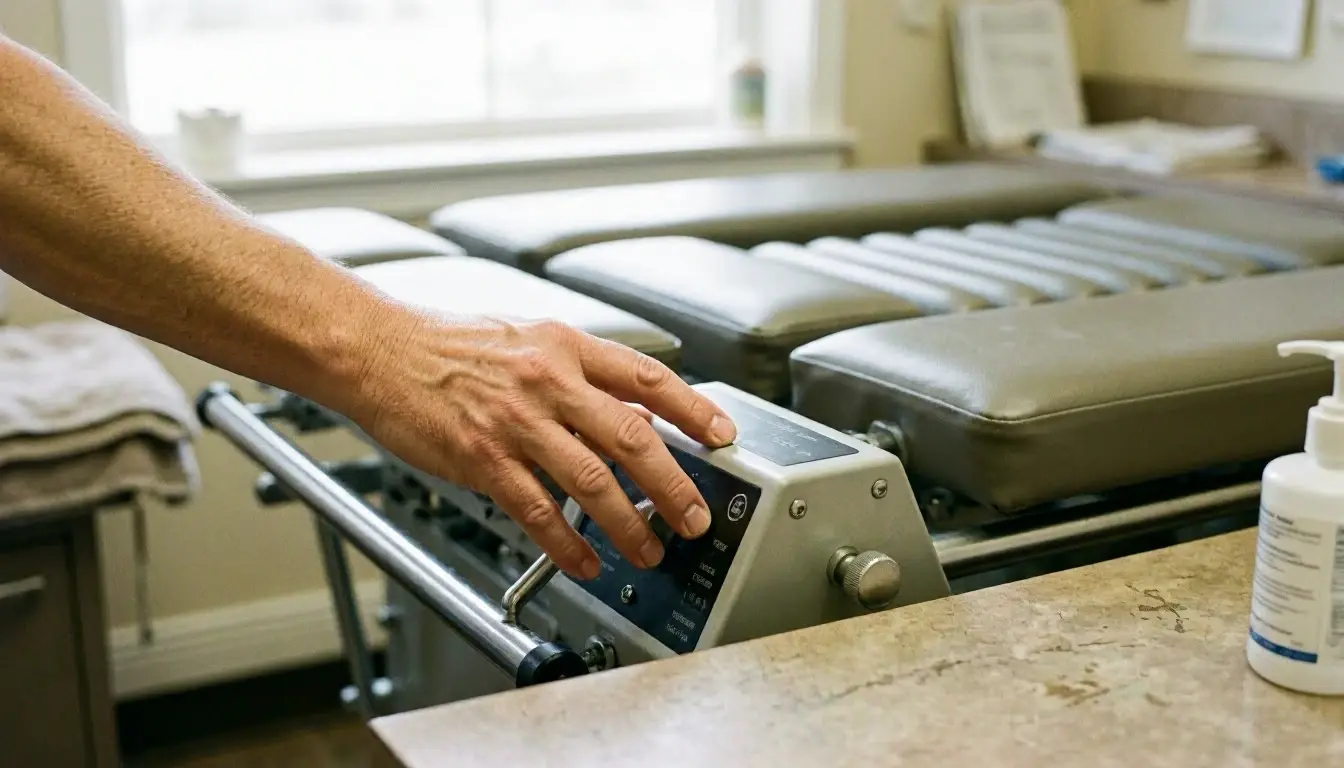
Intersegmental Traction is a non-invasive chiropractic technique designed to improve spinal function. The treatment involves a specialized table equipped with rolling mechanisms that move along the length of the spine. As the rollers pass beneath the patient, they apply gentle pressure to each vertebra, creating a stretching and mobilizing effect. This process helps to restore proper motion between spinal segments, which can become restricted due to injury, poor posture. Or repetitive stress.
Related glossary terms: Chiropractic Adjustment, Spinal Decompression, Myofascial Release.
The goal of Intersegmental Traction is not to forcefully manipulate the spine but to encourage natural movement and flexibility. Unlike manual adjustments, which focus on specific joints, this therapy targets the entire spine in a rhythmic, controlled manner. It's particularly useful for patients who experience generalized stiffness or discomfort rather than localized pain. The therapy is also beneficial for maintaining spinal health between adjustments, making it a common addition to ongoing chiropractic care plans.
How Intersegmental Traction Works?
The mechanism behind Intersegmental Traction relies on the table’s rolling motion to create traction and mobilization. When a patient lies face-up on the table, the rollers move slowly along the spine, lifting and separating each vertebra slightly. This action stretches the muscles, ligaments. And discs between the vertebrae, promoting better alignment and reducing tension. The rhythmic movement also stimulates blood flow, which can accelerate healing and reduce inflammation in the surrounding tissues.
The amount of pressure applied during the treatment is adjustable, allowing chiropractors to customize the intensity based on the patient’s comfort and needs. A typical session lasts between 10 and 20 minutes, during which the patient remains fully clothed and relaxed. The process is passive, meaning the patient doesn't need to actively participate beyond lying still. This makes it an accessible option for individuals with limited mobility or those who prefer a gentler approach to spinal care.
Intersegmental Traction is often used as a preparatory step before manual adjustments. By loosening the spine beforehand, the therapy can make next adjustments more effective and comfortable. It is also frequently recommended for patients recovering from injuries, such as whiplash or minor back strains, as it helps to restore range of motion without placing additional stress on the body.
Why Intersegmental Traction Matters?

Intersegmental Traction plays a valuable role in chiropractic care by addressing spinal stiffness and restricted motion, which are common contributors to back pain and discomfort. When vertebrae lose their natural mobility, it can lead to compensatory movements, muscle imbalances. And increased wear on the spinal discs. By restoring proper motion, the therapy helps to alleviate these issues, reducing the risk of chronic pain and improving overall spinal function.
In practice, The benefits of Intersegmental Traction extend beyond pain relief. The therapy’s ability to boost circulation and flexibility can support the body’s natural healing processes, making it a useful tool for both recovery and prevention. For patients with sedentary lifestyles or jobs that require prolonged sitting, the therapy can counteract the effects of poor posture and spinal compression. It is also a safe and gentle option for older adults or individuals with conditions that make manual adjustments less suitable.
When Intersegmental Traction Matters Most?
Intersegmental Traction is particularly beneficial in situations where spinal mobility is compromised. This includes conditions such as chronic back stiffness, postural imbalances. Or recovery from minor injuries like sprains or strains. It is also commonly used for patients experiencing generalized discomfort rather than sharp, localized pain, as it addresses the spine as a whole rather than targeting a single area. And the therapy is often recommended for individuals who are new to chiropractic care, as it provides a gentle introduction to spinal mobilization.
Another key scenario where Intersegmental Traction is valuable is in maintenance care. For patients who have undergone initial treatment for back pain or spinal issues, the therapy can help sustain the benefits of adjustments and prevent recurrence. It is also useful for athletes or active individuals looking to maintain spinal flexibility and reduce the risk of injuries. In clinical settings, chiropractors may use the therapy as part of a broader treatment plan, combining it with other modalities like manual adjustments, exercises. Or soft tissue therapies for full care.