
What Is Nerve Compression?
Nerve Compression is pressure on a nerve from nearby tissue, such as a spinal disc or muscle. The pressure can disrupt nerve signals and lead to pain, tingling, numbness, or weakness. Symptoms can appear along the nerve's path, not just at the spot where pressure occurs.
Quick Facts About Nerve Compression
- Category
- Nerve condition
- Used for
- Explaining nerve-related symptoms
- Common confusion
- Sciatica is a symptom pattern
- Also called
- Pinched Nerve
- Often discussed with
- Sciatica Treatment
Key Takeaways About Nerve Compression
- Symptoms may follow a nerve's path.
- The location of symptoms helps guide an exam.
- Sciatica describes symptoms, not their exact cause.
How Nerve Compression Works
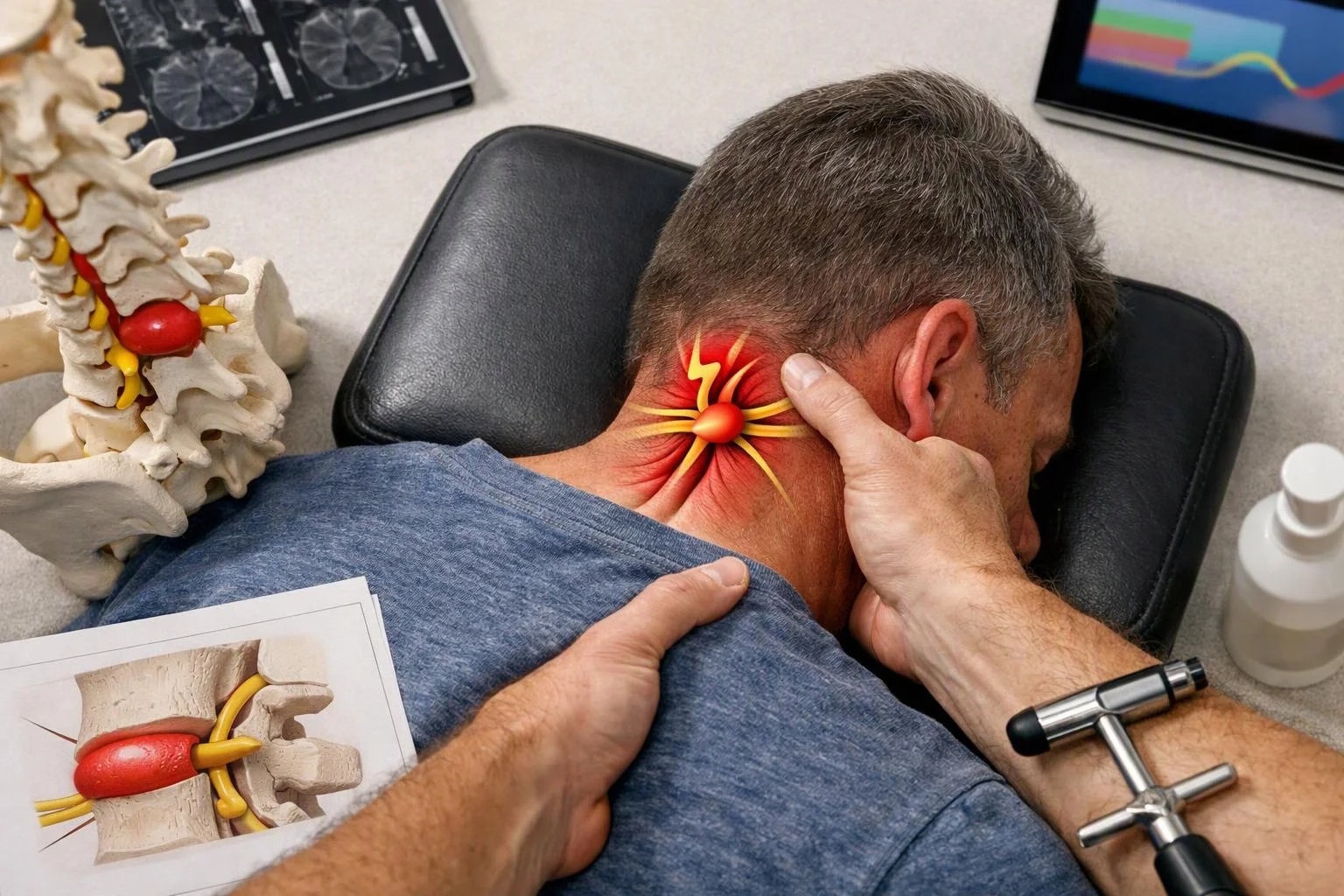
Nerve compression can change the signals a nerve carries between the body and the brain. A compressed nerve may send pain signals or have trouble carrying messages that control muscles. The effects depend on the nerve involved and the tissue pressing on it. Related service: Sciatica Treatment.
Related glossary terms: Lumbar Radiculopathy, Disc Bulge, Spinal Stenosis.
In the lower back, a disc bulge can press on a nerve root. A nerve root is the part of a nerve that branches from the spine. Symptoms may travel through the buttock and down the leg.
That leg pain is often called sciatica. Sciatica doesn't identify the source of pressure by itself. An exam can help distinguish a nerve problem from pain that starts in a muscle or joint.
From the Arrowhead Clinic - Duluth team
When we assess sciatica symptoms, we ask where the discomfort travels and what movements affect it. We also check how you move and look for changes in strength or feeling. That pattern helps us consider whether a nerve may be involved.
Nerve Compression in Practice: A Real-World Example
A person seeking sciatica treatment feels pain that travels from the lower back into the leg. An exam checks the pattern of pain and movement to help identify whether nerve pressure may play a role.
Related Services
Related Terms
Lumbar Radiculopathy
Lumbar Radiculopathy is a nerve condition caused by irritation or pressure on a nerve root in the lower back.
Disc Bulge
A disc bulge is a change in a spinal disc that extends beyond its usual edge.
Spinal Stenosis
Spinal Stenosis is a condition that narrows spaces in the spine where nerves travel.
Piriformis Syndrome
Piriformis Syndrome is a condition in which the piriformis muscle in the buttock irritates the nearby sciatic nerve.
Arrowhead Clinic - Duluth
Have Questions About Nerve Compression?
Contact Arrowhead Clinic - Duluth for practical guidance on Nerve Compression and related chiropractor work in Duluth.