
What Is Electromyography?
Electromyography is a test that records electrical activity in muscles. It helps a clinician look for signs of a problem affecting a muscle or the nerve that controls it. The test may help explain symptoms such as weakness or numbness, alongside a person's health history and exam findings.
Quick Facts About Electromyography
- Category
- Muscle and nerve test
- Used for
- Assessing muscle and nerve function
- Common confusion
- Nerve conduction study
- Also called
- EMG
- Often discussed with
- Sciatica Treatment
Key Takeaways About Electromyography
- A small needle electrode records activity inside a muscle.
- Muscle activity is checked during rest and movement.
- EMG and a nerve conduction study measure different signals.
How Electromyography Works
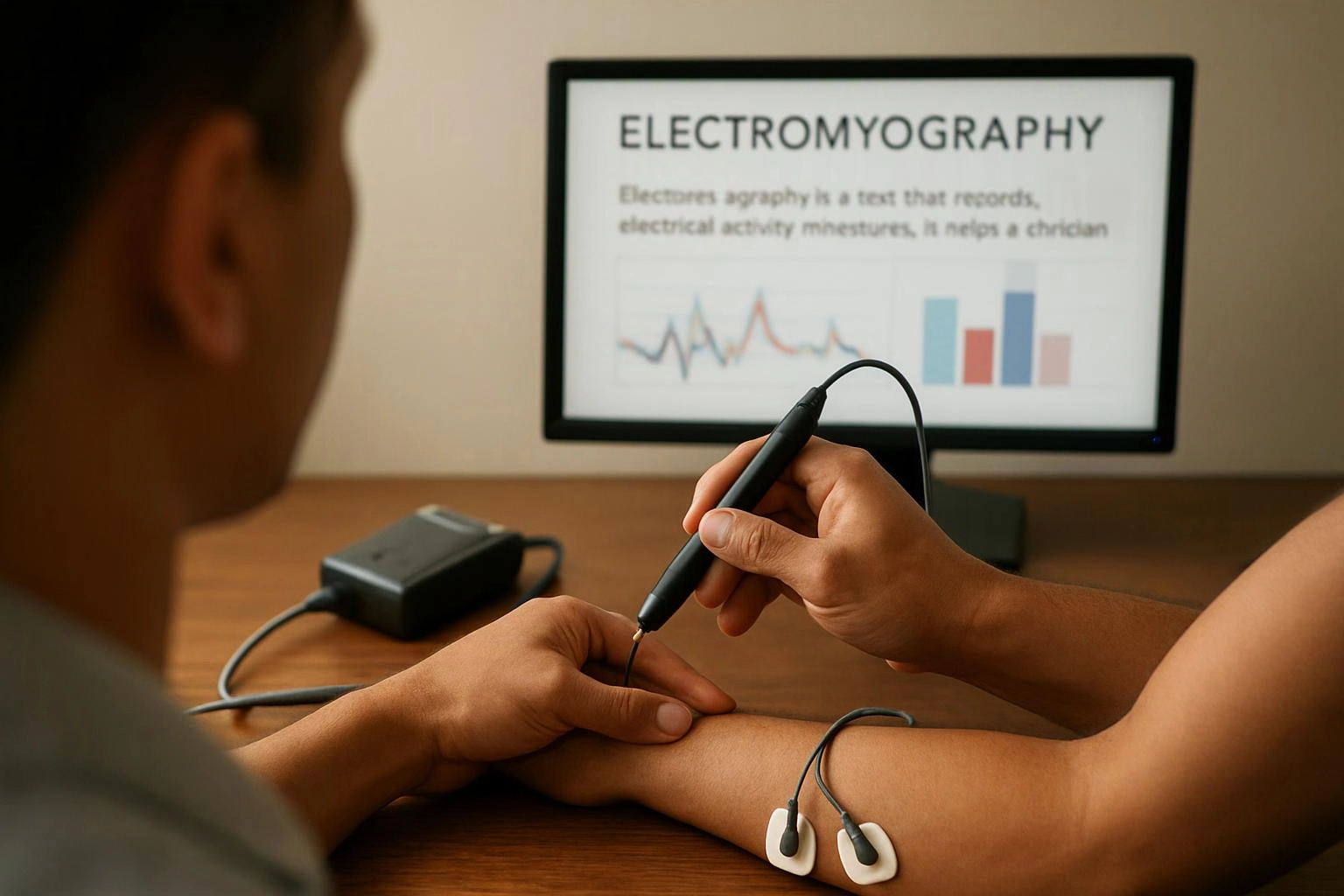
During electromyography, a clinician places a thin needle electrode into a selected muscle. The electrode picks up signals while the muscle rests and contracts. A machine displays the signals for the clinician to review. Related service: Sciatica Treatment.
Related glossary terms: Lumbar Radiculopathy, Nerve Compression, Disc Bulge.
The signal pattern can help show whether a muscle responds as expected. Activity during rest or changes during contraction may offer clues about the source of symptoms. The clinician considers those clues alongside the exam and health history.
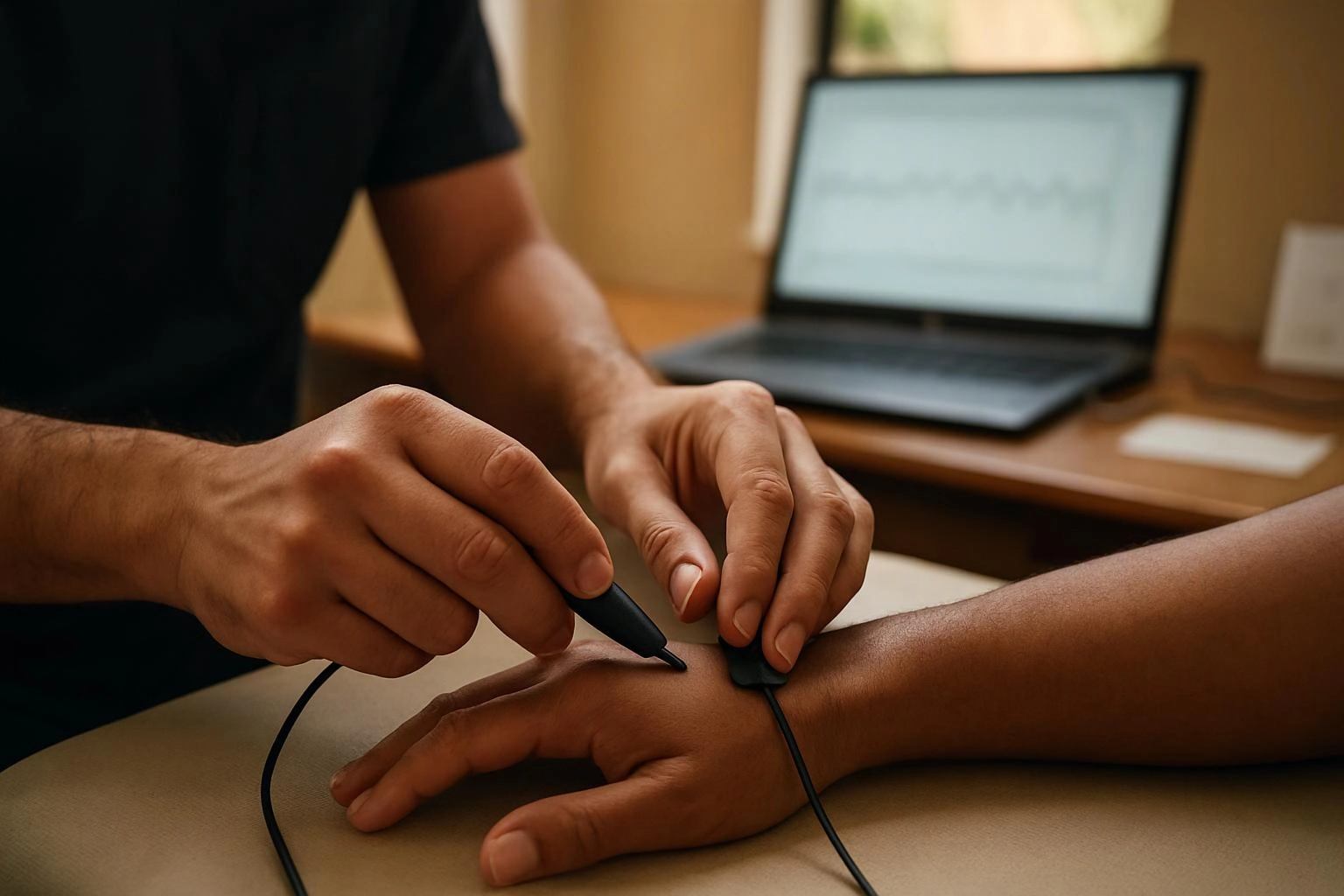
A nerve conduction study is a separate test that may accompany EMG. It uses electrodes on the skin to assess how signals travel along a nerve. The tests look at different parts of the system that controls movement.
From the Arrowhead Clinic - Duluth team
When we review sciatica symptoms, we consider where pain travels and whether weakness is present. If an EMG report is part of your records, we consider its findings alongside your exam. A test result alone doesn't describe your full experience.
Electromyography in Practice: A Real-World Example
A person seeking sciatica treatment has leg pain and weakness. An EMG report may help the care team understand whether a nerve problem is affecting the leg muscles.
Related Services
Related Terms
Lumbar Radiculopathy
Lumbar Radiculopathy is a nerve condition caused by irritation or pressure on a nerve root in the lower back.
Nerve Compression
Nerve Compression is pressure on a nerve from nearby tissue, such as a spinal disc or muscle.
Disc Bulge
A disc bulge is a change in a spinal disc that extends beyond its usual edge.
Piriformis Syndrome
Piriformis Syndrome is a condition in which the piriformis muscle in the buttock irritates the nearby sciatic nerve.
Arrowhead Clinic - Duluth
Have Questions About Electromyography?
Contact Arrowhead Clinic - Duluth for practical guidance on Electromyography and related chiropractor work in Duluth.