Understanding Disc Herniation
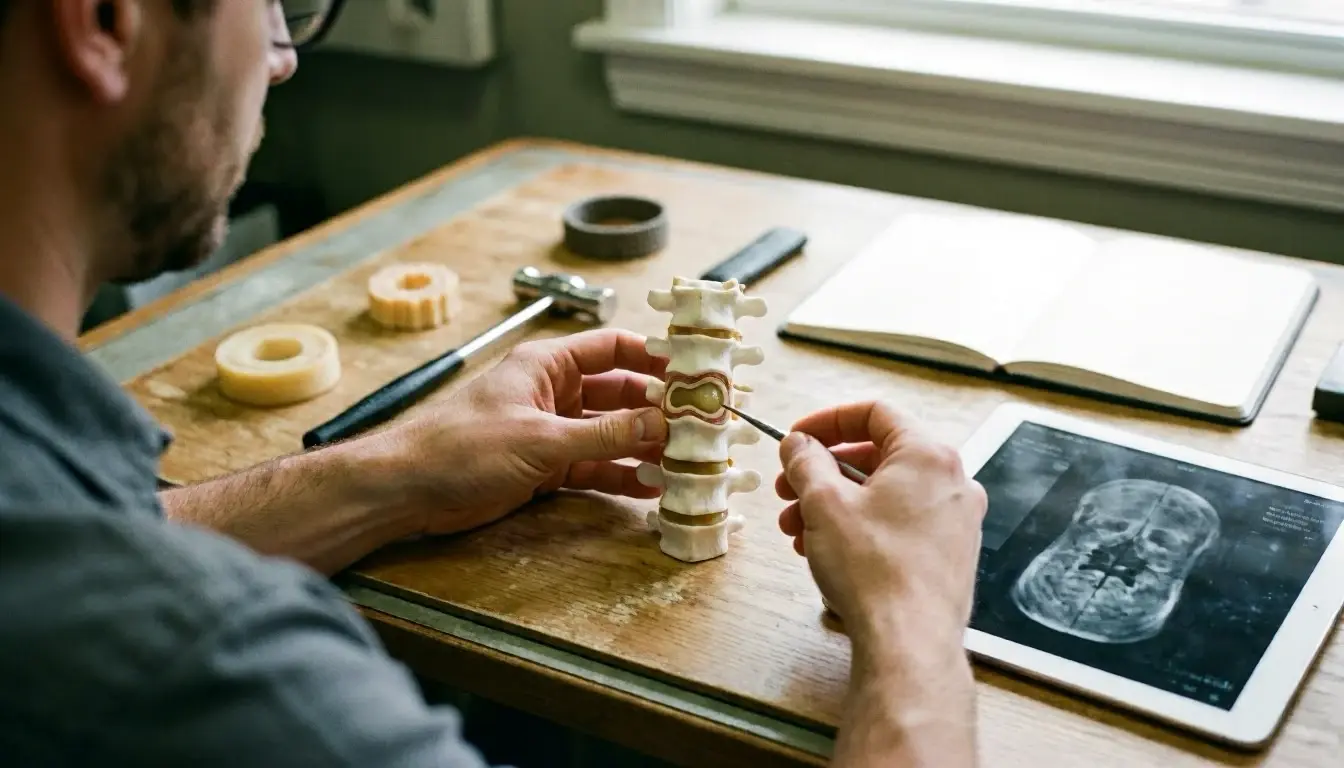
A spinal disc has a soft center. It feels like jelly. The center can push through a crack in the disc.
The spine has bones called vertebrae. Discs sit between these bones. They work like cushions.
Discs help absorb shock. They let the spine bend and twist. Over time, discs can wear down or tear.
This can happen from injury. It can also happen from doing the same motion over and over. Aging can cause it too.
The inner gel can leak out. It may press on nearby nerves. This can cause pain, tingling. Or muscle weakness.
Disc herniation can happen anywhere in the spine. It most often affects the lower back or neck.
The lower back carries most of the body's weight. This makes it more likely to get hurt.
Symptoms change based on where the herniation is. They also change based on how bad it is.
A herniated disc in the lower back can cause sciatica. Sciatica is a sharp pain that goes down the leg.
A herniated disc in the neck can cause pain. It can also cause numbness or weakness in the shoulder, arm. Or hand.
Some people have a herniated disc and don't know it. It may show up on a test like an MRI.
How Disc Herniation Works?
Disc herniation starts with small tears. These tears are in the disc's outer layer.
They often come from stress. They can also come from a sudden injury. These tears can weaken the disc.
The inner gel can push through. It may leak out. This can bother or squeeze nearby nerves.
Nerves work like wires. They send signals from the brain to the body. A herniated disc can mess up these signals.
This can cause pain. It can also cause numbness or muscle weakness. The area the nerve controls is affected.
Doctors diagnose disc herniation in a few ways. They ask about your health history. They also do a physical exam.
A chiropractor or doctor may check for pain spots. They may test muscle strength and reflexes. They also check nerve function.
Imaging tests help too. These include MRI or CT scans. They show where the herniation is.
An MRI can show if a nerve is being pressed. It can also show if the spinal cord is affected.
X-rays don't show discs. But they can rule out other problems. These include fractures or arthritis.
Why Disc Herniation Matters?
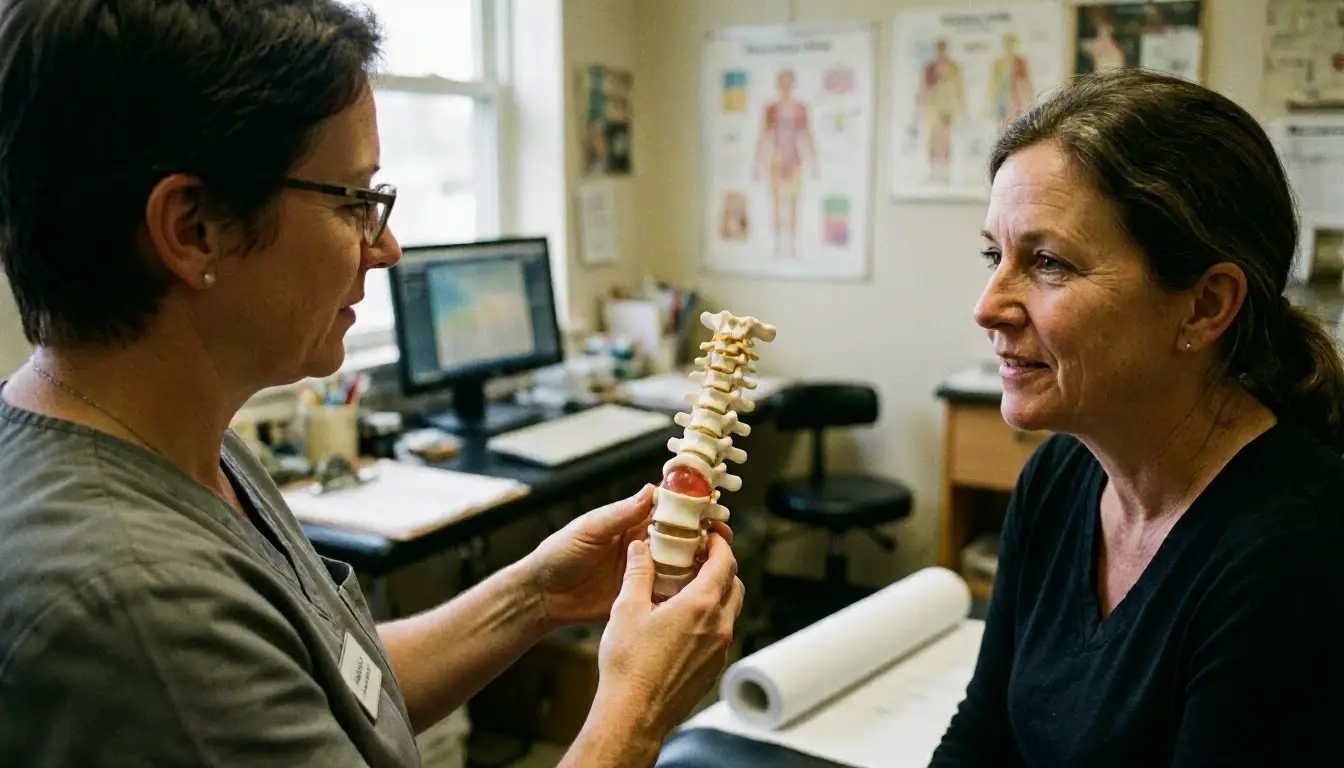
Disc herniation can change daily life. It can limit movement. It can also cause long-lasting pain.
A herniated disc can make sitting hard. It can make standing or walking painful too. Over time, it can hurt nerves.
It can weaken muscles. It can also cause loss of feeling. Early treatment can help stop this.
Surgery is sometimes needed. But many people feel better without it. Chiropractic care can help.
Physical therapy and medicine can help too. These can manage pain. They can also prevent bigger problems.
Chronic pain can affect your mind. It can cause stress or anxiety. It can also lead to depression.
This can make work or hobbies hard. It can also hurt relationships. Treating disc herniation early helps.
It can improve your quality of life. You can return to normal activities. You'll have less pain and more energy.
Understanding the condition helps. It lets you make good choices. You can pick treatments and lifestyle changes.
It also helps you prevent future injuries. This keeps your spine healthier.
When Disc Herniation Matters Most?
Disc herniation matters when it affects daily life. It can also risk long-term health.
Some jobs make symptoms worse. These include construction or nursing. Warehouse work can too.
These jobs involve lifting or bending. They can also involve twisting. This can hurt the spine.
Athletes are at higher risk. This includes football or gymnastics players. Weightlifters are at risk too.
Even desk workers can get disc herniation. Poor posture can cause it. Sitting too long can too.
Bad ergonomics can strain the spine. This can lead to herniation over time.
Some symptoms need a doctor. Severe pain that won't go away is one. Numbness or weakness in arms or legs is another.
Loss of bladder or bowel control is serious. Pain that gets worse at night is too. These may mean a bigger problem.
Cauda equina syndrome is one. It needs quick medical help. Other warning signs need attention too.
People with past back injuries are at risk. Those with arthritis or osteoporosis are too. They should be extra careful.
Regular exercise helps. So do proper lifting techniques. Keeping a healthy weight helps too.
These can lower the risk of disc herniation. They can also prevent bigger problems.